
Build strong foundations
Connect melody, harmony, accompaniment and counterpoint. Basic theory and notation reading recommended.
Pillars of Composition →

Develop the musical ideas you hear into pieces you can finish. Our online music composition courses cover melody, harmony, form and writing at the piano, with practical lessons from working film, TV and game composers.
Explore piano playing and composition together with David McCaulley. Work through technique, harmony, modes, voicings and writing exercises, then use those skills to develop your own original composition.
Best for: producers and composers who want to develop ideas at the keyboard. You need a piano or MIDI keyboard; basic notation reading is helpful but not required.
Build your composition foundations with Ryan Leach. This music composition course connects melody, harmony, accompaniment and counterpoint through a spiral learning approach: revisit each skill with greater depth and apply it in writing assignments.
Best for: composers building or refreshing their core skills. Start with basic music theory and notation reading; develop the tools to turn musical ideas into structured pieces.
Develop short sketches into longer, coherent pieces with Ryan Leach. Pillars of Composition II uses sonata form to explore contrasting themes, development and transitions, alongside reharmonization, modulation and solfege ear training.
Best for: composers who already understand basic notation and diatonic harmony. Choose this composition course when your challenge is sustaining and connecting ideas beyond the opening.
Study orchestral composition and orchestration with Mattia Chiappa. Learn to develop themes, shape harmony, build piano sketches and distribute musical ideas across a changing orchestral texture, with detailed cinematic writing walkthroughs.
Best for: intermediate and advanced composers who know basic theory and chords. Choose this course to develop your orchestral writing, including voicing, doubling, counterpoint and transitions.
Write music inspired by anime and Japanese role-playing games with Ryan Leach and Gavin Leeper. Level 1 introduces the melodic, harmonic and orchestral building blocks behind this musical language through an original story and practical composition tasks.
Best for: composers with basic notation reading and knowledge of scales, chords and Roman numerals. Start here before exploring the more advanced material in Levels 2 & 3.
Continue your anime and JRPG composition studies with Ryan Leach and Gavin Leeper. Explore modal and jazz-influenced harmony, woodwind writing, non-functional harmony, quartal and quintal voicings, percussion, and guest lessons on shakuhachi and koto.
Best for: composers ready to build on Level 1 or a comparable foundation. Choose this sequel to expand your harmonic palette and instrumental colours.
Follow Ryan Leach from an initial idea to a finished fantasy track. Explore melodic, harmonic and rhythmic techniques, choose instrumental colours, and see how the composition and orchestration develop together.
Best for: composers who know basic theory, diatonic harmony and orchestration. Choose this focused walkthrough to practise writing magical music for film, games or animation.
Compose adventurous orchestral music with Ryan Leach. Follow three themes—a Viking theme, a dragon theme and a flying theme—from blank page to full orchestra, then see how they are combined into a longer suite.
Best for: composers with basic theory, diatonic harmony and orchestration knowledge. Practise thematic writing, rhythmic character, instrumentation and the development of connected musical ideas.
Find your next step
What would you like to write? Match your learning goal with the course below.
Connect melody, harmony, accompaniment and counterpoint. Basic theory and notation reading recommended.
Pillars of Composition →Work with themes, transitions and larger forms. For composers comfortable with diatonic harmony.
Pillars of Composition II →Combine piano technique, voicings and composition. Bring a piano or MIDI keyboard.
The Piano Composer →Discover the harmonic and melodic language of Japanese film and game music. Start with Level 1.
The Legend of Otoe →Exclusive discounts for our students
All our students are eligible for discounts on libraries and plugins by renowned developers. This exclusive benefit alone can result in substantial savings, amounting to hundreds of dollars on composing software and libraries!


.webp)







Ryan’s approach is a welcome surprise that really benefitted my own writing process.
Unlike other courses, he sketches in Dorico before jumping into his DAW. Ryan’s detailed analysis of the genre can be applied to nearly any musical style. They may call this a “mini” course… it is anything but. There is a ton of inspiring material - so much so that I grabbed Ryan’s other courses!

20th Century Orchestral Writing was a real game changer for me.
Since I have no formal training, I wasn't aware how important it is to first clarify your musical ideas and tie them together harmonically before attempting orchestration. Mattia's clear explanations about the importance of piano sketching and excellent MIDI orchestration examples opened up a whole new world of musical exploration for me. Highly recommended.

Ryan's Pillars of Composition is an incredible resource.
Even for an absolute beginner, like me, the content is straightforward and provides a great roadmap to improve your compositions.

The Mixing Cinematic Music course is by far my favorite investment of this year.
Beginner or expert: Joël Dollié is an excellent teacher and gives valuable and essential mixing tips and tricks for everyone.

I bought this course really quickly after release, because I knew Ryan makes high quality videos regarding composition and orchestration on YouTube... and it was 100% worth it :)
The course is structured really well (the process of always returning to already learned techniques is really good) and for me as a new composer, who just started this year, the content has such great value.
100% recommended

Ryan’s course is fantabulous! I’m a songwriter and composer of musical theater with 20-plus years of experience, and I can tell you that diving back with Ryan into the details of form, counterpoint, melodic construction, and harmony has proved invaluable.
What’s more, I find Ryan’s straightforward approach, as well as his no-nonsense, effortless decision-making process to be joyful and awe-inspiring.

The Legend Of Otoe was the first course I took on Master The Score.
It's a nice step-by-step process to write your first jrpg main theme with a solid harmony underneath. I enjoyed the different homework assignments that felt like small achievements before even completing the course.

Getting Melody, Harmony, Form and Counterpoint into one course might sound almost impossible, but this course manages to break down all these aspects of composition into small units and increases the complexity in little consecutive steps that can be easily followed.
The assignments after each chapter ensure that it’s never getting boring, and that the new know-how can be applied immediately.

The course did not only teach me the jrpg style, but also helped me to expand my harmonic vocabulary.
Every composition I wrote since finishing with Legends of Otoe benefited from this new knowledge. I am eagerly looking forward to Legends of Otoe part two!
I was looking for a shorter course to fit my available time and I am a big John Powell fan, so this offering fit the bill.
Ryan’s teaching style makes learning each new topic easy. I found the modules to be just the right length, introducing each topic and then following Ryan in real-time as he composes and arranges each theme. By the end of this course, I was able to compose and produce a complete suite in the style of the “Vikings and Dragons” trailer, which was my goal and is something I would not have been able to do before taking this course.

My composition skills were ok before I enrolled in this course. When I enrolled I began to see my compositional skills improve gradually over time.
Ryan's way of teaching is a great contributor to my overall improvement.

If writing eight bars and getting stuck sounds familiar, Ryan’s courses will help.
Ryan’s teaching style is clear and his methods can be used to structure your compositions, no matter what genre you are writing for. After completing Wizards & Witches I used some of the techniques to complete a couple of scores for a spaghetti western. I can honestly say Ryan has helped me structure and elevate my writing process…no more half finished ideas!!

As a software engineer during the week and a hobbyist composer on weekends, I've always loved creating music. Despite over a decade and a half of classical piano lessons as a student, I lacked the skills to orchestrate my ideas. Master the Score has been an invaluable resource in bridging that gap. Courses like "20th Century Orchestral Writing" and "Pillars of Composition" make complex topics approachable, helping me connect the dots with patterns I recognised but never fully understood. Courses like The Legend of Otoe and Composing Worlds also bring a special focus that adds sparkle to my compositions.
I now feel much more confident orchestrating my work, and I’ve even found greater enjoyment in films by discovering the same techniques and ideas from the courses and understanding their applications.

Remember all of those fun RPG's and Anime's from your childhood? Do Final Fantasy, Spirited Away, and Breath Of The Wild come to mind?
Now imagine for a second that you'll be able to make music for those games and media. Otoe Levels 1, and Otoe Levels 2&3 are a godsend to you if you'd like to learn how to write music for this genre. I highly recommend purchasing this course if you'd like to upgrade your harmonic palette as well as music theory!

Pillars of Composition II is a course devoted to making us write a piece in Sonata form.
It is in depth and modern. Ryan breaks down the form into smaller pieces so that we learn it. There is a discord forum devoted to Pillars of Composition II. In the discord forum we can post our works to get feedback. This is awesome because assessment is a key component to learning. I highly recommend this course to anyone that wants to write larger works. It's wonderful. If you like Ryan's YouTube channel, you'll love this course: Pillars of Composition II.

This course was a game changer for me. I wanted to improve my skills and get better at what has always been a hobby.
Now, I feel much more confident writing my own pieces and adding creative variation to them.

“20th Century Orchestral Writing” is an immediate purchase for anybody wanting to own a complete how-to for modern film scoring.
It offers a complete and detailed look at the most important aspects of the musical language needed to sound convincing in Hollywood and elsewhere. From the notes to the sound this covers it all. If you are serious about orchestral film scoring this is a must have.

I learned so much from watching your work and from the knowledge you shared.
Anyway, I submitted two pieces to the Film Scoring Academy of Europe's online Master's Degree Program and I got accepted into the program! So I just wanted to say thank you!
The truth is that I am delighted with this course because Mattia has a great ability to explain and turn a simple melody into a harmony of great interest.
Especially with this course, I am learning how to structure my musical sketches effectively and how to compose more efficiently. Without a doubt, I strongly recommend this course primarily to those people who need to continue improving their level of creating orchestral mockups with interesting harmonies.

Choose Pillars of Composition if you want to strengthen melody, harmony, accompaniment and counterpoint. Choose The Piano Composer if you prefer to develop your ideas at the keyboard. If you already write short pieces and want to extend them, consider Pillars II.
Requirements vary. Pillars I and II use notation, and basic notation reading is expected. The Piano Composer does not require notation reading, although it can help. Check the requirements on each course page before enrolling.
Composition develops the musical material: melody, harmony, rhythm and form. Orchestration explores how instruments present that material through colour, register, voicing and texture. Many composers study both.
Try a free resource
Try a free lesson in sentence form →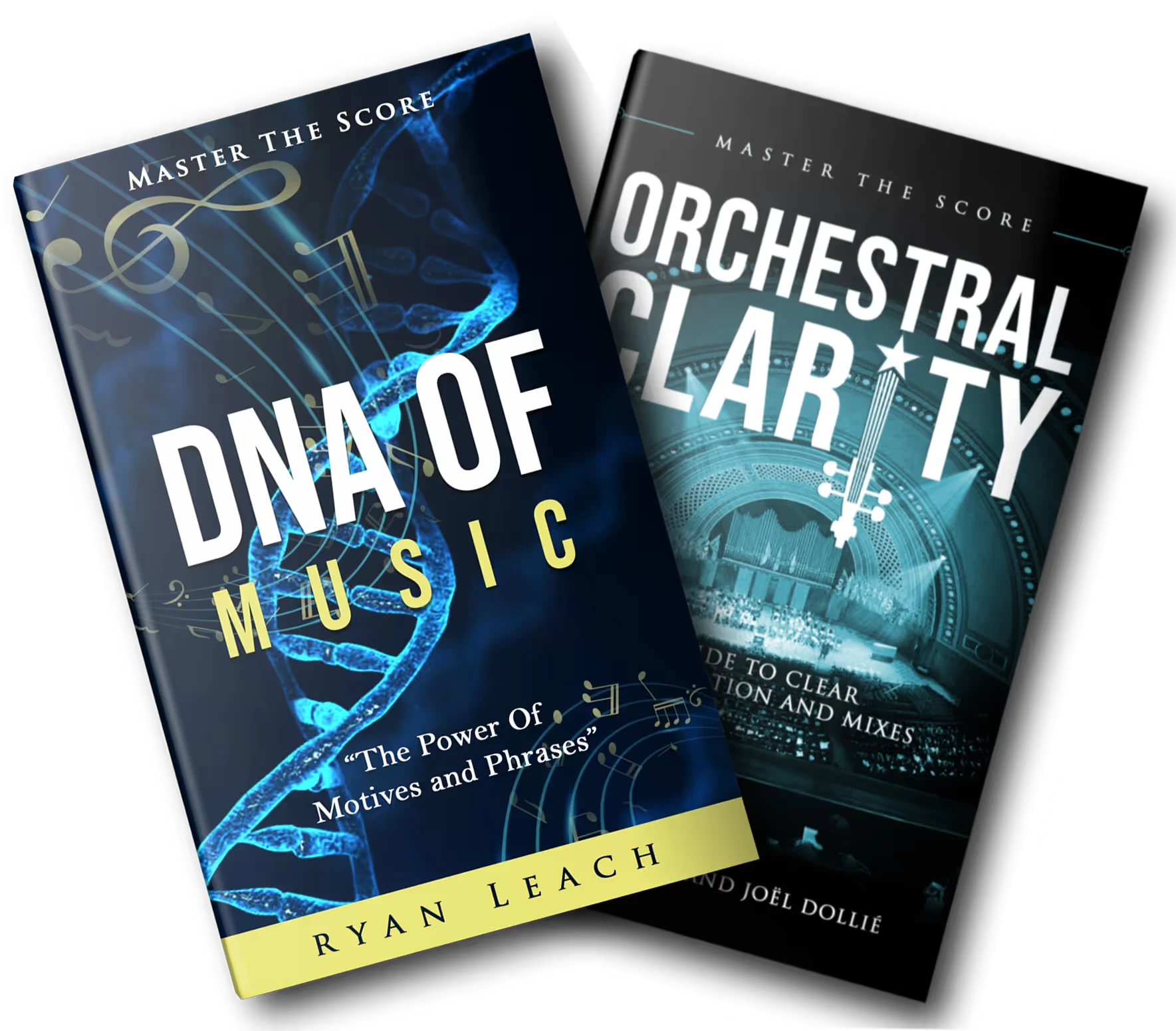
Online education for media composers — orchestral writing, trailer music, mixing and more, taught by working professionals.


