

Music Theory and Composition

Ryan Leach is an Award Winning Composer for film and tv. His music has been heard on Every major Network. His clients includes Disney, Mtv and Netflix.
Syncopation is what happens when the rhythm stops agreeing with the beat. Accents land where you don't expect them — between the beats, on the weak ones, or just ahead of the bar line — and the music can gain drive, surprise or a floating feel, depending on the context. This guide covers what syncopation is, how to count and write it, and how film, game and trailer composers actually use it, drawn from the rhythm and groove material in Pillars of Composition and Trailer Music: Modern Styles.
Syncopation is the deliberate placement of accents on beats, or parts of beats, where the listener doesn't expect them. In most music we sense a regular grid of strong and weak beats — in 4/4, beat 1 is the strongest, beat 3 is next, and beats 2 and 4 are weaker. Syncopation works against that grid: a note is accented on a weak beat, a strong beat is left empty, or a note arrives just before the beat and holds through it.
The important part is that the grid never goes away. Syncopation only works because the listener still feels the underlying pulse; the tension comes from hearing an accent pull against it. Take the pulse away entirely and the same rhythm stops sounding syncopated and starts sounding free, or simply unclear. A straight drum, bass or synth layer can make that reference explicit, but it is not required: listeners can continue to feel an implied meter during rests or syncopated passages.
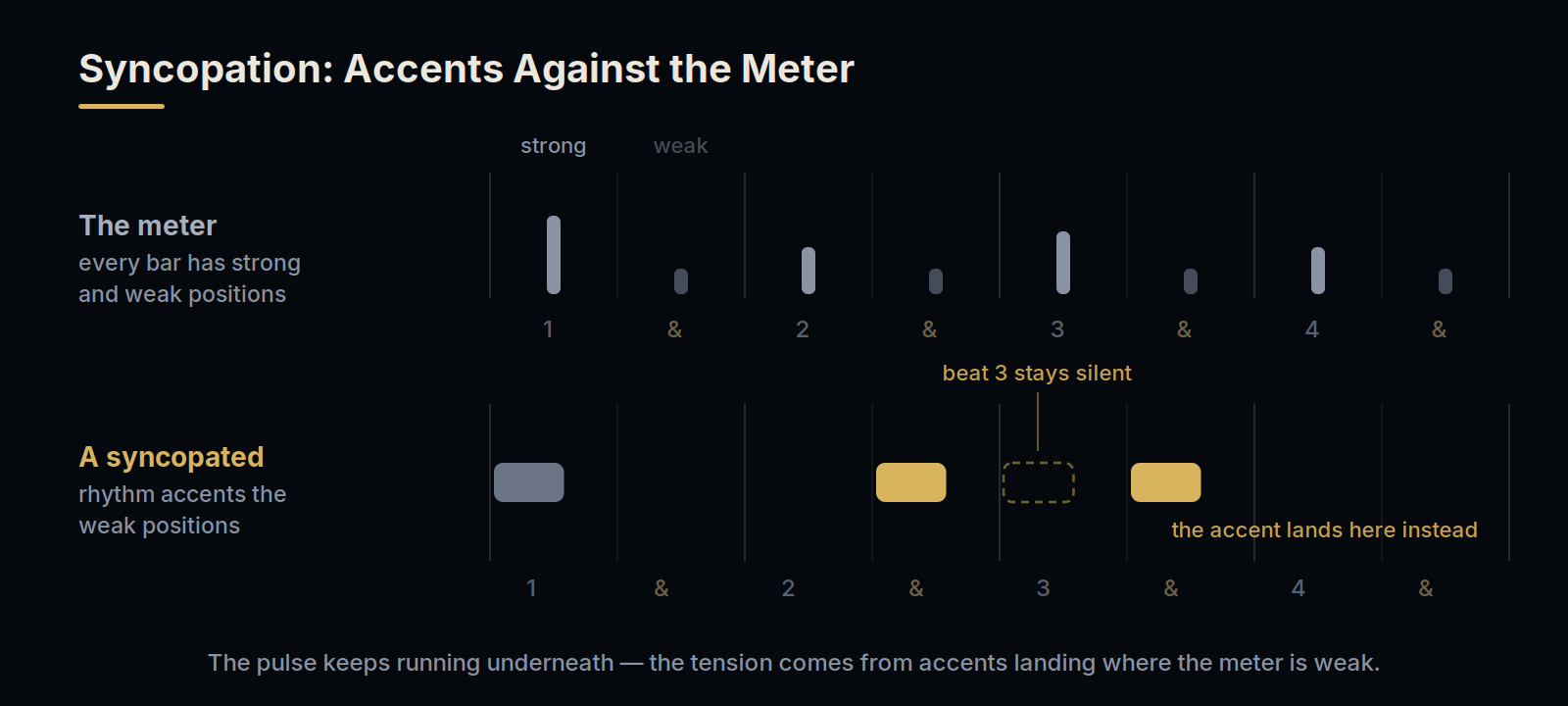
To talk about syncopation, distinguish beats, strong beats and offbeats. In a 4/4 eighth-note count, the numbered positions 1, 2, 3 and 4 are the quarter-note beats or onbeats; the downbeat is beat 1. Beat 1 has the strongest metrical weight, with beat 3 typically the next strongest. The “&” subdivisions between the numbered beats are offbeats: “1 & 2 & 3 & 4 &”.
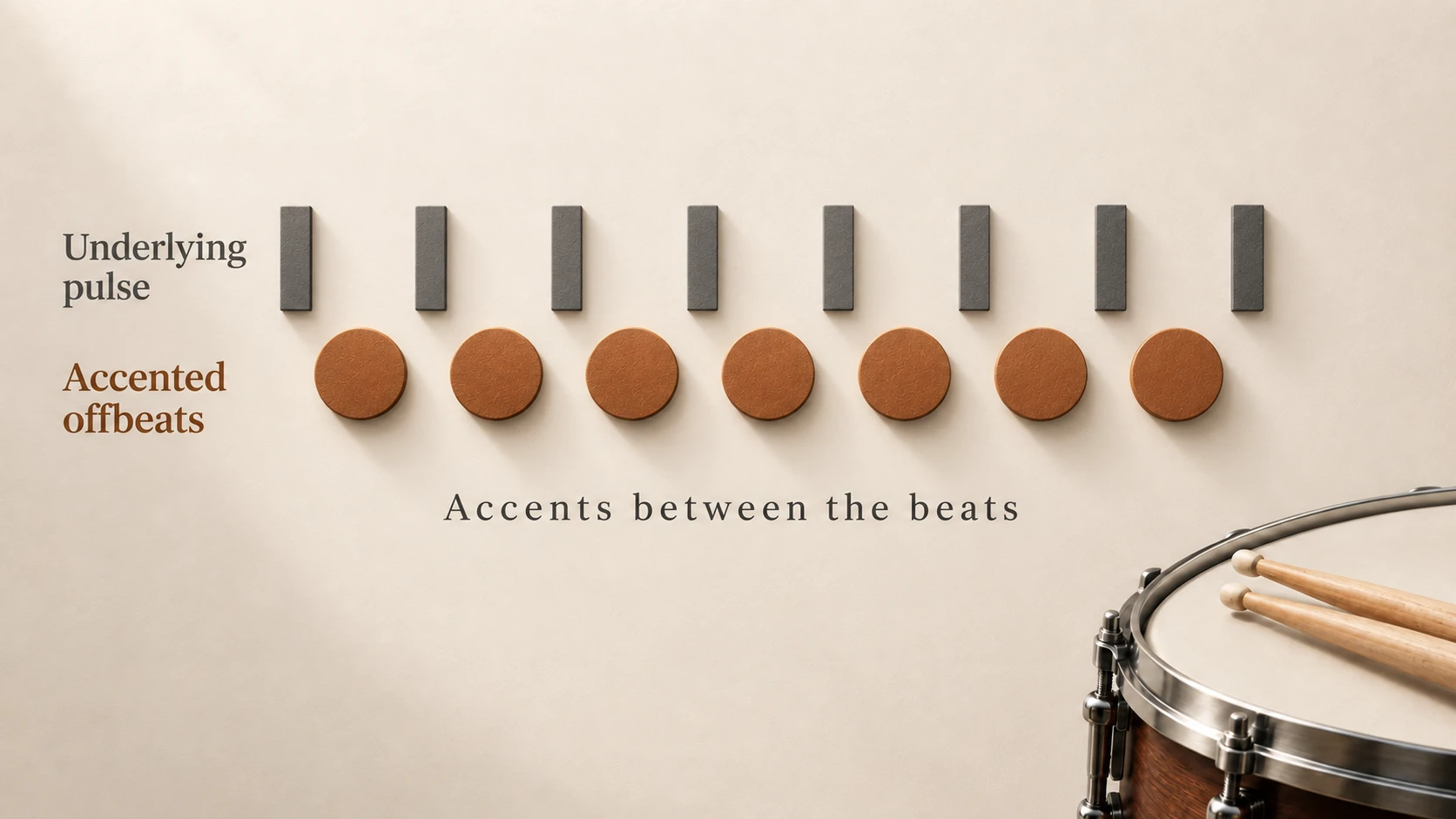
Playing on the offbeat is the simplest form of syncopation, but the two terms aren't identical. "Offbeat" describes a position in the bar; syncopation describes the effect of accenting a weak position at the expense of a strong one. A hi-hat ticking away on every "&" while the kick marks the quarter-note beats barely registers as syncopation — it's just part of the groove. But when the main accent of a phrase lands on an "&" and beat 1 stays silent, you feel the rhythm tugging against the meter. That tug is syncopation.
Counting syncopated rhythms works the same way as counting straight ones — you say the full grid out loud ("1 & 2 & 3 & 4 &") and notice which syllables carry notes. A rhythm that is hard to feel when you read it becomes easy the moment you count it against the grid.
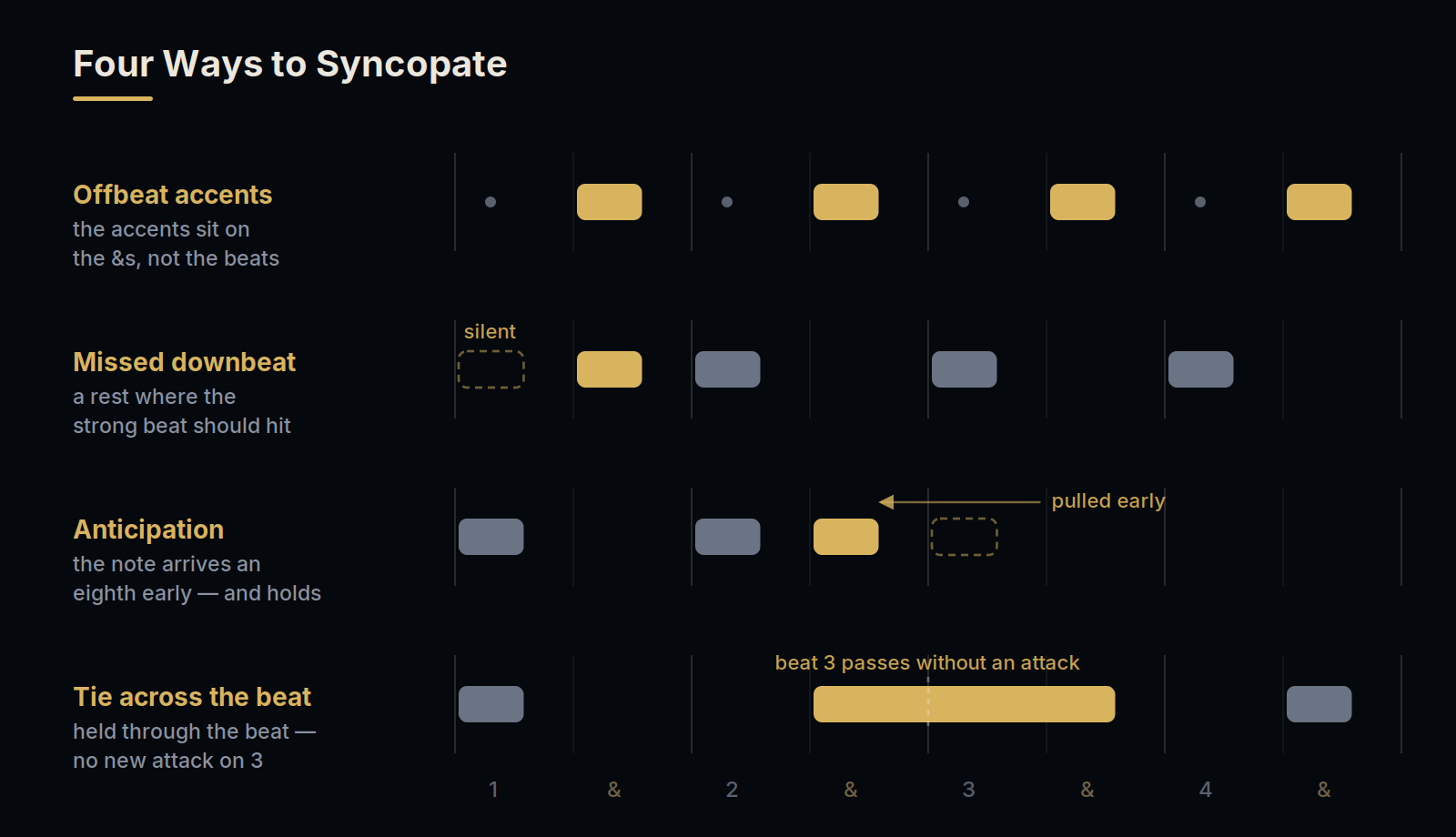
Composers reach for a handful of recurring devices:
Most real-world syncopated rhythms combine several of these at once: an anticipation into a tied note, followed by offbeat accents, is the DNA of countless grooves.
Pillars of Composition Melody, harmony, accompaniment and counterpoint from the ground up — the rhythmic side of theme-building included. Explore the course
Syncopation isn't only a groove tool — in film and game scoring it carries meaning.
The feather theme from Forrest Gump is a textbook case: the melody is syncopated almost constantly, landing off the beat everywhere except the very first beat of every two bars. The rhythm floats the way the feather floats — pulled this way and that, never quite settling — which mirrors the character it accompanies. The syncopation is the storytelling.
The main theme from Pirates of the Caribbean uses the opposite dose: mostly driving repetition in a rolling three-feel, with one small syncopated figure that lifts the line and keeps it exciting. And because the phrase ends on that syncopated lift rather than a settled downbeat, the rhythm itself tells you the theme isn't over yet — it works like a question demanding an answer, pushing the music forward into the next phrase.
Syncopation can also mean unpredictability. In a storm cue, accenting a rhythmic figure partly on the beat and partly off it makes the pattern impossible to anticipate — the way you can never predict when lightning will strike. This is old orchestral territory: Stravinsky built entire pieces from displaced accents, and cinematic writing borrows the trick constantly. We walk through exactly this device in one of the track walkthroughs in Cinematic Music Production.
Cinematic Music Production Emmy-winning composer Adam Lukas takes five commercially released tracks apart layer by layer — composition, sound design and the full mix. Explore the course
Game music leans on syncopation for character, too. An adventure theme gains its bounce when the accompaniment pattern moves with syncopation instead of marching through "1, 2, 3, 4" — the harmony parts feel alive and springy under a wide, bold melody. And in a bright platformer theme like "Sprawling Savanna" from Super Mario 3D World, a small syncopated lift-off inside the opening idea is enough to give the whole theme its playful energy. Even "magical" writing uses rhythm as sleight of hand: a syncopation where the listener expects a plain beat is a small, surprising misdirection — the rhythmic equivalent of a card trick.
If you want to see how these small rhythmic cells fit into complete themes, our guide to musical sentence form covers how basic ideas grow into full phrases, and how to write a catchy melody looks at the melodic side of the same coin.
In modern trailer and hybrid orchestral production, syncopation is less about single melodies and more about how layers interact.
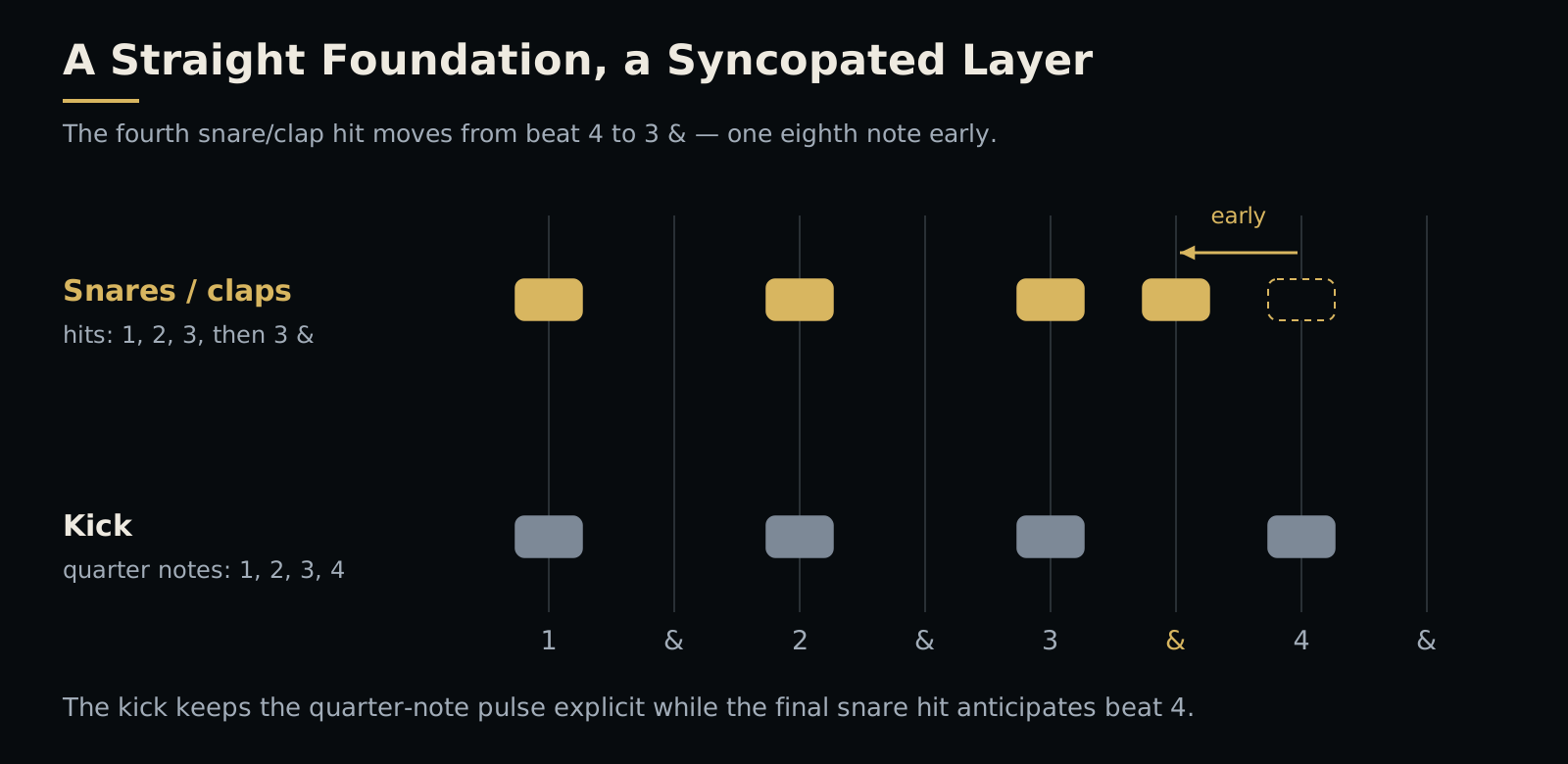
A very reliable recipe: keep the foundation straight and syncopate on top of it. In the EDM-inspired track built in Trailer Music: Modern Styles, the finale runs the kicks four-on-the-floor — one kick on each quarter-note beat: 1, 2, 3 and 4 — while the snares and claps follow a syncopated groove above them. The two layers touch, separate and meet again, and that friction is what makes the section feel tight and alive instead of mechanical.
The same thinking works in orchestral textures. A syncopated viola ostinato running against straight cellos and basses gives a string bed motion and grip without anyone playing louder. And a syncopated theme can be an identity move: starting a trailer sketch from a small syncopated motif makes the idea recognizably yours from the first two bars, because the rhythm alone already has character.
Just as important is knowing where to stop. When one syncopated groove is driving a climax, copying that groove into every other layer — crashes, hits, arps — usually makes the section worse, not better. One or two layers carry the syncopation; the rest hold the frame. Restraint is what keeps the groove readable.
Trailer Music: Modern Styles Three full trailer tracks produced start to finish — including the syncopated grooves, drops and builds of the modern styles. Explore the course
A practical route, whether you work on paper or in a DAW:
The same process scales from a two-bar drum groove to the rhythmic profile of a full theme.
Our Music Composition & Orchestration Courses
Our Music Production Courses
Our Music Trailer Courses
See All CoursesWhat is syncopation in simple terms? Accents in places where you don't expect them — on weak beats, between the beats, or just ahead of the beat — while the underlying pulse stays steady. The pull between the accent and the pulse is what you hear as syncopation.
What is an example of syncopation? The feather theme from Forrest Gump is a famous one: the melody lands off the beat almost constantly, which makes it float. The offbeat chord "skank" in reggae and the snaps over a straight kick drum in modern pop and trailer music are everyday examples of the same principle.
Is syncopation the same as playing offbeat? Not quite. "Offbeat" names a position — the subdivisions between the beats. Syncopation is the effect of accenting weak positions at the expense of strong ones. Playing on the offbeat is one common way to create syncopation, but rests on strong beats, anticipations and ties across the beat are syncopation too.
How do you count syncopated rhythms? Count the full subdivision grid out loud — "1 & 2 & 3 & 4 &" in 4/4 — and mark which syllables carry notes. Keeping the whole grid in your counting makes displaced notes easy to place, because you always know exactly which "&" a note falls on.
Why does syncopation sound good? Because it plays with expectation. The meter sets up a pattern of strong and weak beats, and a syncopated accent breaks that pattern while the pulse keeps running. The brain registers the mismatch as tension and release — which reads as energy, groove or surprise depending on the context.
Is syncopation used in film music? Constantly. Composers use it to characterize themes (a floating, wandering figure), to create unpredictability (storms, chases, danger), and to give ostinatos and grooves forward motion. Trailer music leans on it heavily, typically by layering a syncopated groove over a straight foundation.
Learn with Master The Score
Courses on composition, orchestration, music production, trailer music and sound design, from composers writing for film, games and media. Students also get exclusive discounts on leading sample libraries and plugins.
Discover all courses →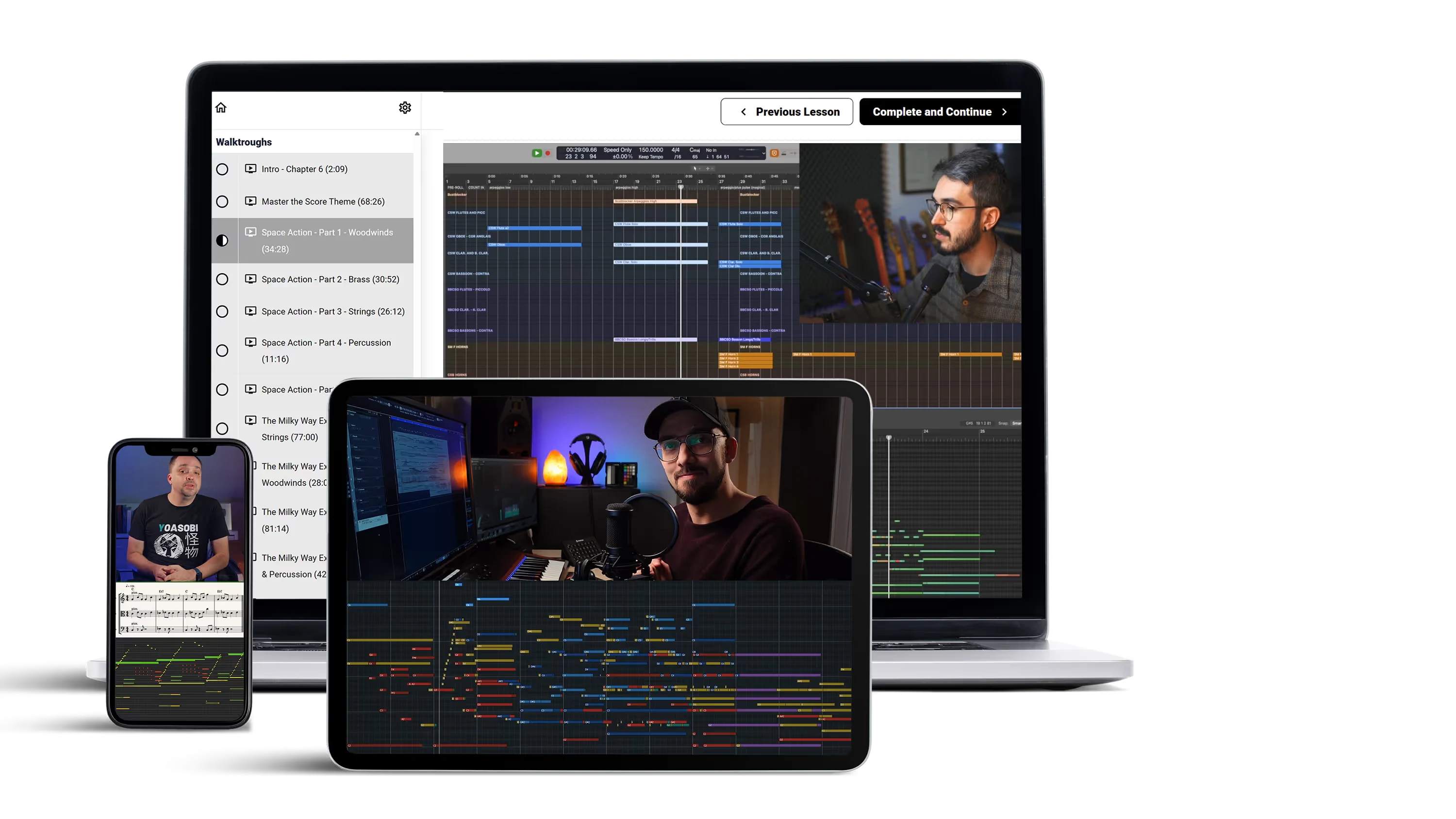
Online education for media composers — orchestral writing, trailer music, mixing and more, taught by working professionals.