

From Piano Sketch to Full Orchestra
Discover how melody, harmony and orchestration work together as Expedition Nautilus grows from a piano sketch into a complete orchestral piece.

Advanced Orchestral Writing, Made Accessible
Follow a clear path into orchestral writing, with each edition exploring new musical worlds and gradually introducing more advanced concepts.

Score Study Meets Practical Writing
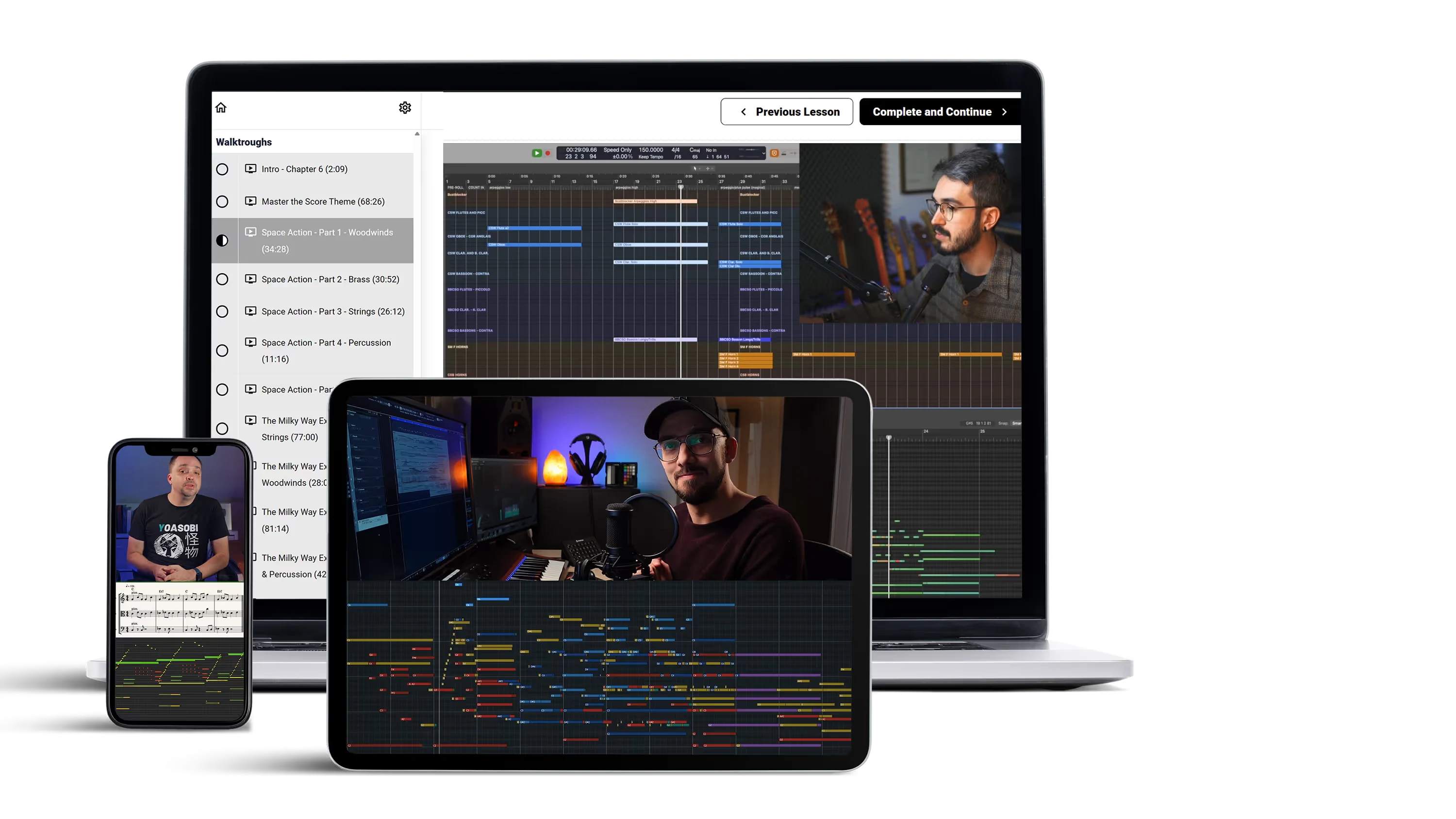
Study the score as David guides you from piano sketch to full orchestration, explaining the principles you’ll apply in your own music.
A Clear Path to Advanced Orchestral Writing
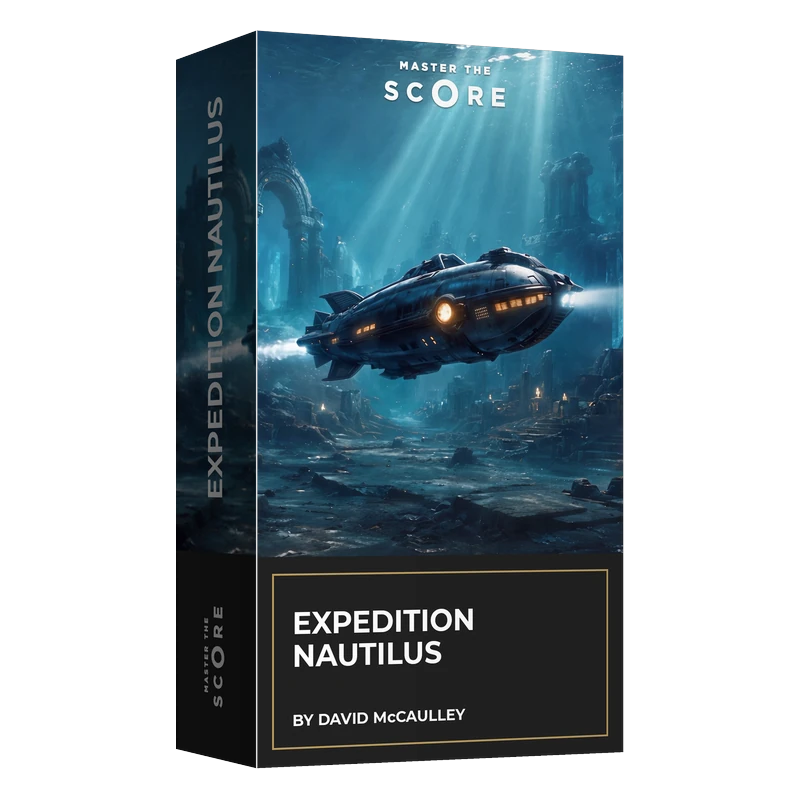
Expedition Nautilus is the first edition of Orchestral Footprints, a course series that teaches the principles of composition and orchestration through original music. Each edition explores a new musical world, gradually introducing more advanced concepts in composition and orchestration—so you have a clear path towards writing more complex music yourself.
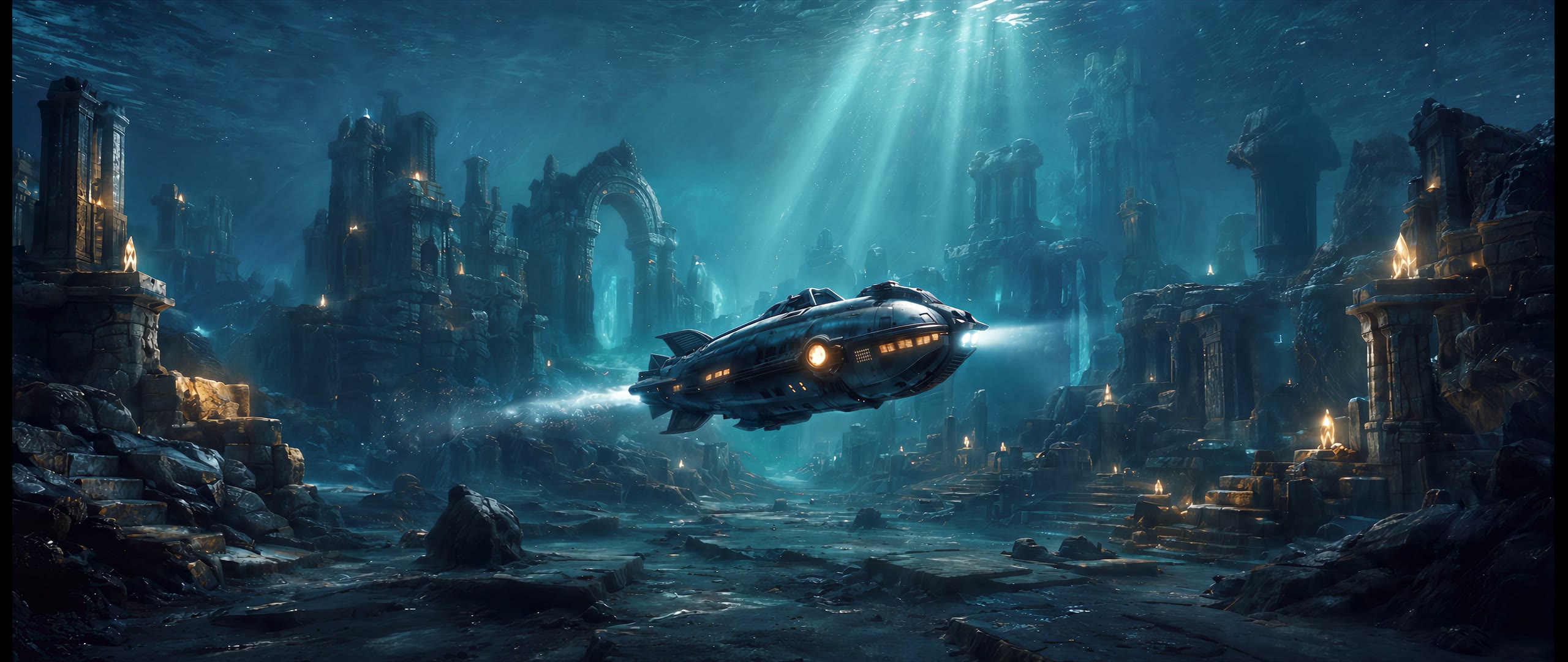
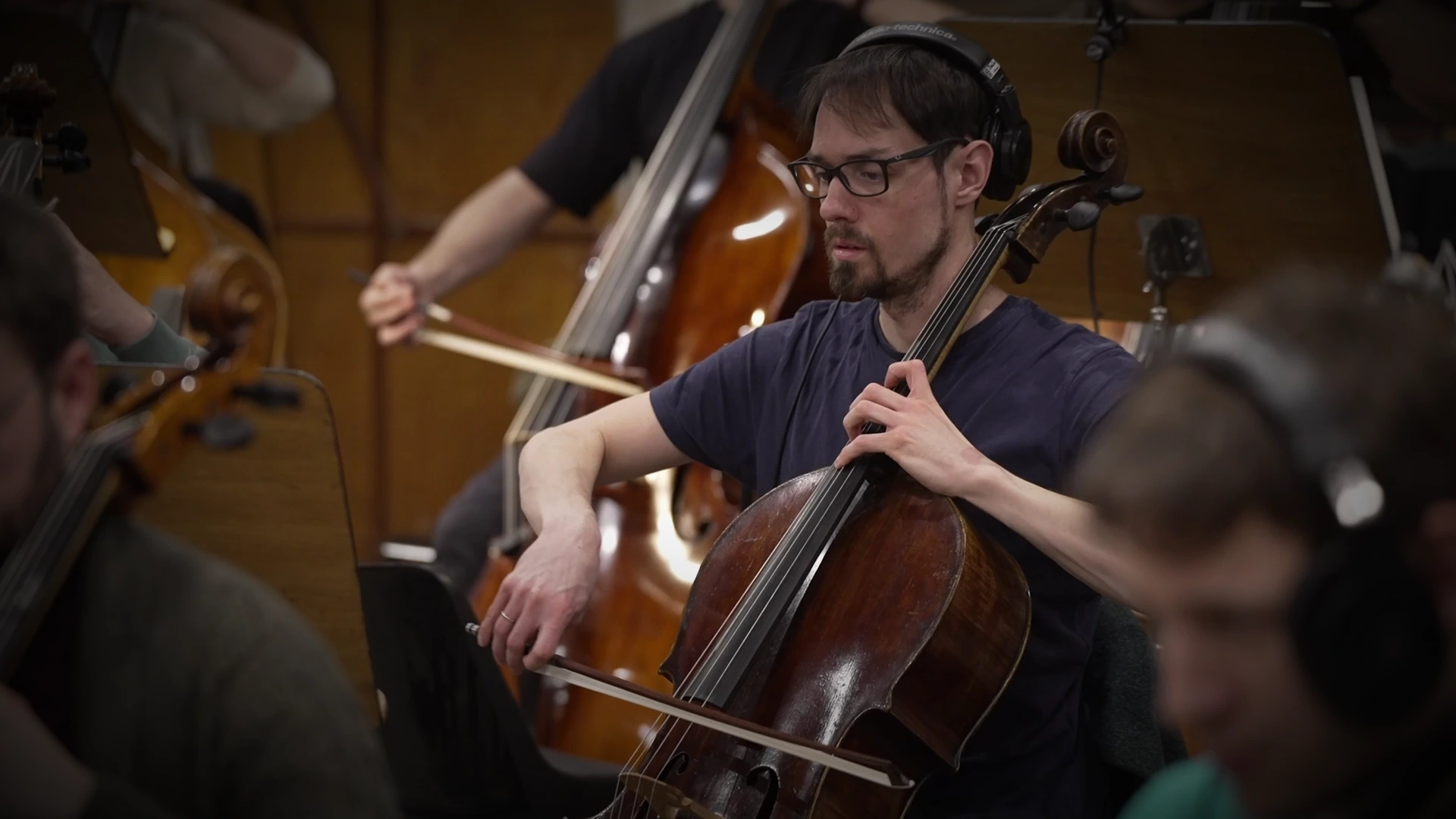
Our first destination is the underwater world of Atlantis. At its heart is an original piece by Benny Oschmann, written exclusively for the series, recorded with the Budapest Scoring Orchestra and mixed by Joël Dollié.
David McCaulley guides you through the piece, section by section. You begin with the melody and harmony in the piano sketch, then explore how instrumental colors, counterlines and accompaniment figures bring the music to life. Along the way, you learn the principles behind these choices and hear their effect in the orchestral recording.
You also put those ideas into practice. Step-by-step writing exercises help you develop your own composition, from the first theme to a complete orchestral score. The final Blueprint chapter brings the process together in a practical guide you can return to for future projects.
Developed by David McCaulley, Benny Oschmann and Nikolaus Daim, the Orchestral Footprints series expands your toolkit with techniques you can use right away, while teaching you the fundamental principles of orchestral writing. Follow in Benny Oschmann's footsteps and create your own orchestral worlds.
David McCaulley
David McCaulley is a pianist and composer with a lifelong love of orchestral film music. On his YouTube channel Film Score Analysis he has published well over 150 score reductions and breakdowns of iconic film scores. He studied composition and piano at the University of North Texas, learning from respected composers including Bruce Broughton, and has scored numerous media projects, all anchored by the piano. At Master The Score he teaches The Piano Composer, a course on turning ideas born at the piano into fully developed compositions, created in collaboration with Nikolaus Daim.
Check out the Trailer
Your Journey to a Lost World
Begin your adventure, expand your musical vocabulary, and explore the art of orchestral writing.
This course is divided by the following steps:
Harmony
Discover the harmonies behind the piece’s sense of mystery and wonder. Starting with the Atlantis progression, David explains how melodic ideas can suggest unexpected chords, how those chords shape the music, and how to plan a change of key. Every idea is shown first in the piano sketch before it is orchestrated, so you hear exactly what each choice does. You’ll see how orchestral figures and moments are already shaped in the sketch, and learn to build them yourself, from intimate passages to rising build-ups and heroic climaxes.
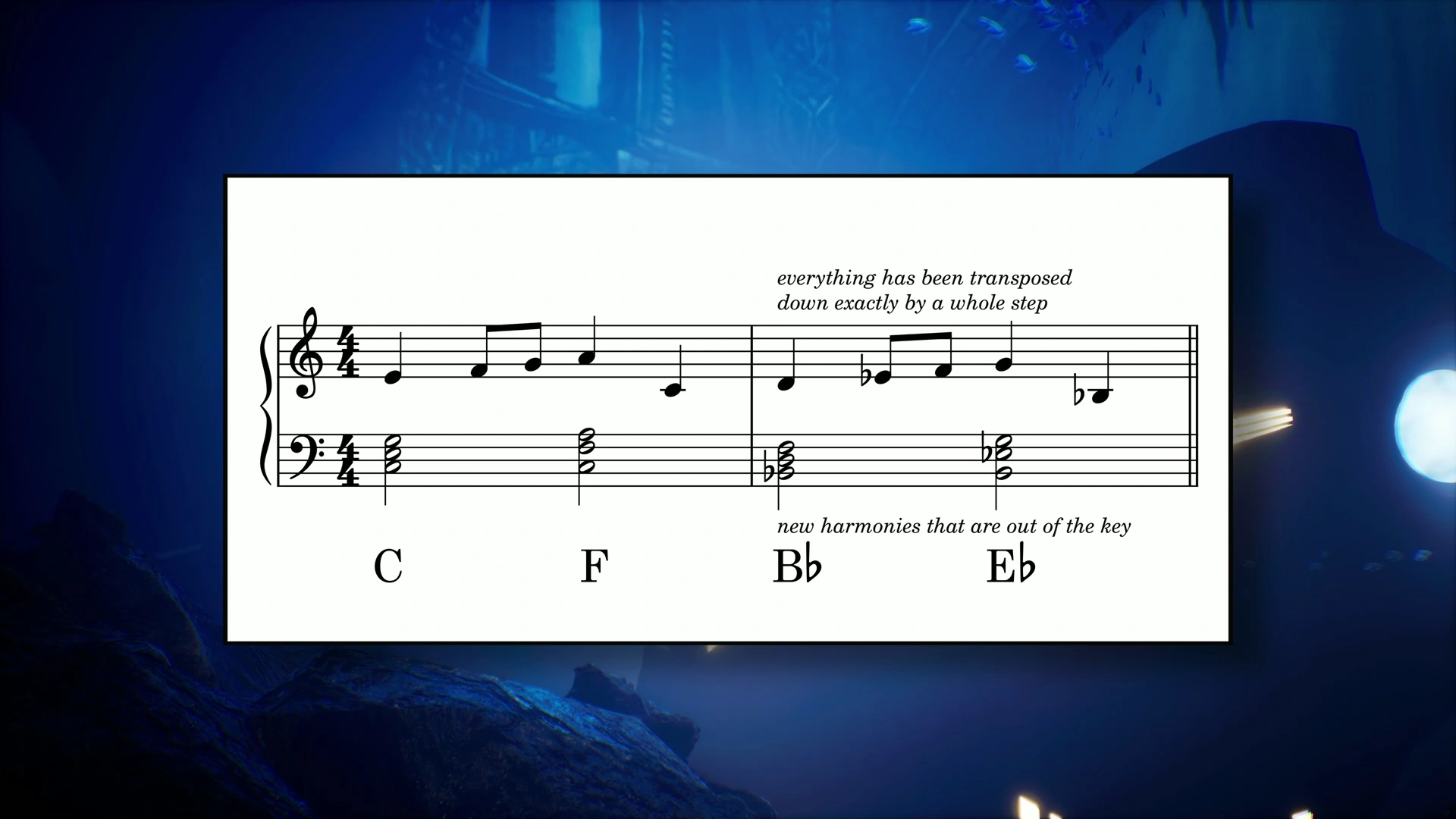
- The Atlantis progression and Mixolydian color
- Chromatic mediants, suspensions and pedal tones
- Tritone progressions and minor plagal cadences
- A practical approach to changing keys
Melody
Follow a theme from its opening idea to a complete musical phrase. Learn how shape, balance and a clear destination give a melody direction, then explore ways to vary it and write a contrasting second theme. You’ll see how the A theme, the B theme and the A prime each grow from simple melodic ideas, and how small variations keep a theme interesting without losing its identity.
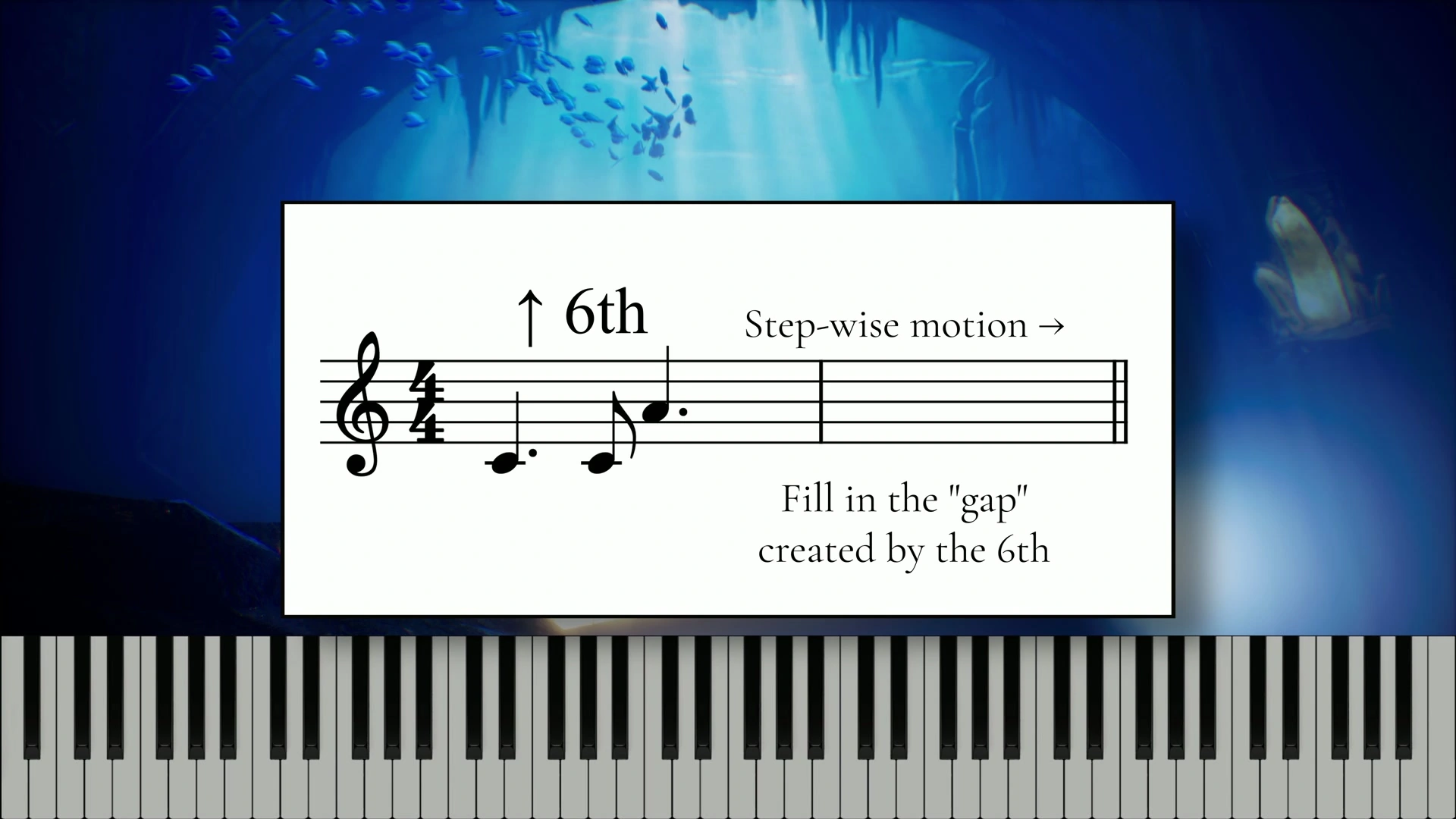
- Balancing expressive leaps and stepwise motion
- Question-and-answer phrases and melodic climaxes
- Sequences, variation, passing tones and neighbor tones
- The trace-and-fill method for shaping a melodic line
Form & Development
Learn how individual sections become a connected musical journey. Explore how the intro hints at what is to come, how the B theme creates contrast, and how the returning A theme and outro build towards the piece’s biggest moments.
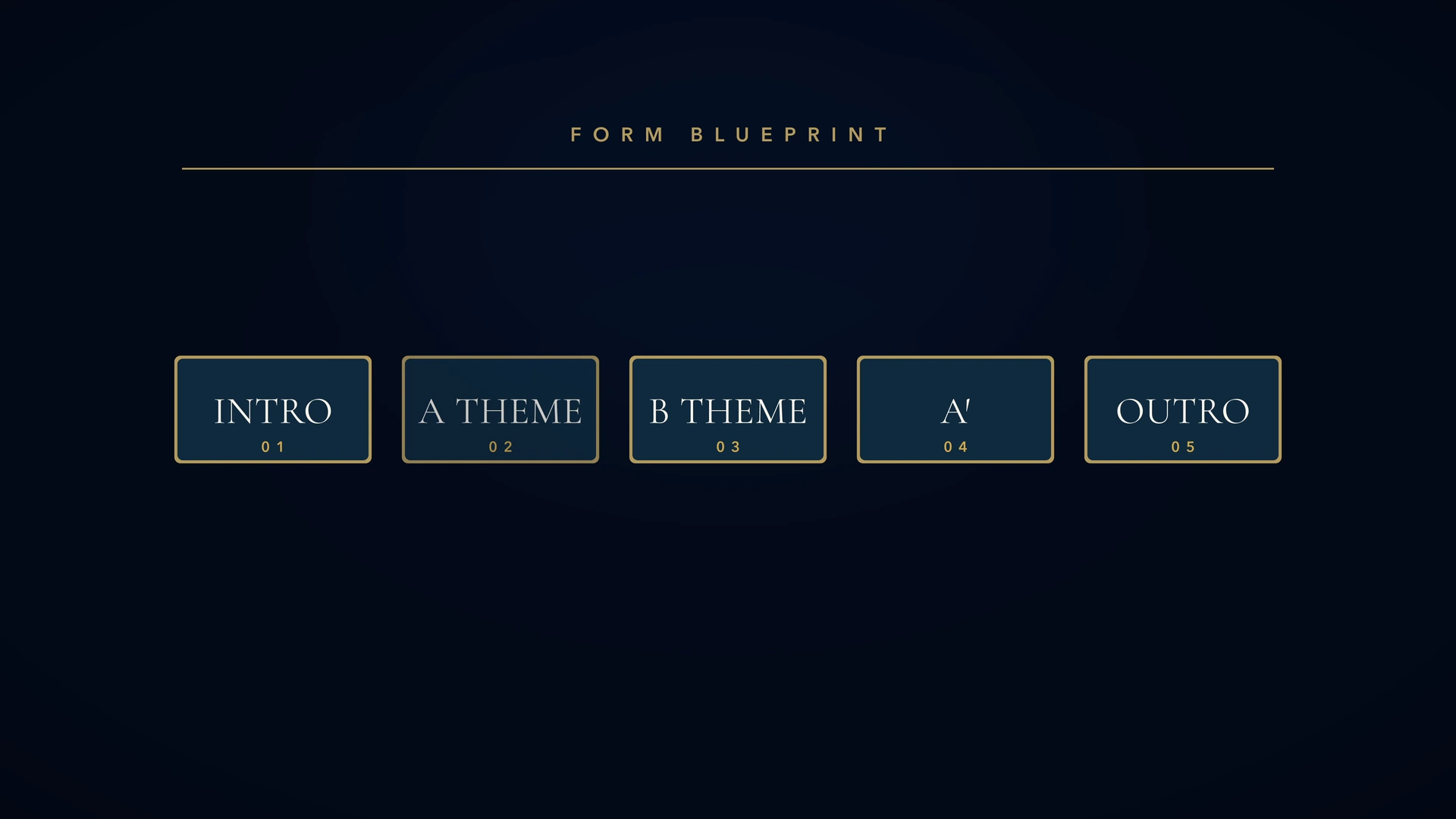
- The roles of the intro, A theme, B theme, A prime and outro
- Contrast and variation across the piece
- Melodic and harmonic hinting
- Building anticipation, ramps and satisfying arrivals
Orchestration
Learn the practical principles that turn a piano sketch into effective orchestral writing. Through examples from the piece, David explains how to write for individual instruments and orchestral sections, covering ranges, voicings and idiomatic writing. Discover how to shape the parts, combine their colors and keep the musical ideas clear as the orchestra grows. Each section is built up layer by layer, from the harmony and counterlines to embellishments and doublings, so you can follow every decision in the full score.
- Instrumental ranges, registers and idiomatic writing
- Voicings, voice leading, articulation and notation
- Musical layers, balance, counterlines and doublings
- Practical techniques for strings, woodwinds, brass, choir and harp
Your Own Piece
Put each set of ideas into practice as you develop your own composition, section by section. Begin with Benny’s music as a model, then explore your own choices. The final Blueprint gathers the process into a practical reference you can return to. Each section ends with “Write Your Own” lessons for both the sketch and the orchestration, so your piece grows step by step alongside Benny’s.
This is the first step in Orchestral Footprints. Each new edition explores another musical world, adding concepts and complexity as you build your skills.

- Guided writing tasks for the sketches and orchestration
- The complete score to study and use as a reference
- A Blueprint bringing the techniques together
- Share your work in the Discord community for feedback
Course Curriculum
Walkthroughs


.webp)